What Does Heirloom Mean? Family Heirlooms, Stories and Care
An heirloom is a valued possession passed down through the generations of a family. Here is where the word comes from, what counts, how to write down an object's story and how to keep it safe.
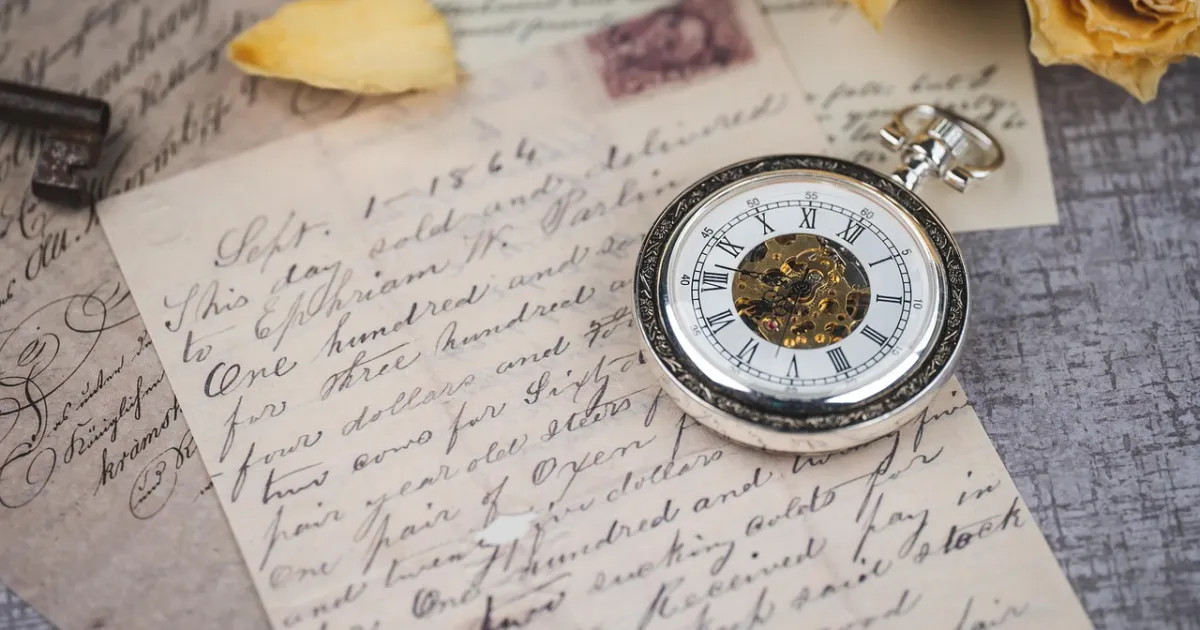
An heirloom is a valued possession that has been passed down through the generations of a family: a grandmother's ring, a family Bible, a pocket watch, a quilt. A family heirloom does not have to be worth money. What makes it an heirloom is that it has been handed on, and that a story travels with it.
Where the word heirloom comes from
Heirloom joins two old words: heir and loom. In Middle English, as heirlome, "loom" did not mean a weaving frame in particular. It meant a tool or article of any kind, so an heirloom was, literally, a tool or article passed to one's heirs.
The term began as a legal one. In historical English law an heirloom was a chattel, meaning a movable possession, that by long custom was treated as belonging with a family estate and passing with it by inheritance. Heirlooms in that strict sense had become almost unknown by the beginning of the twentieth century. The everyday meaning, anything handed down in a family, is the one that survived.
The old legal sense can still turn up in fiction. The plot of Anthony Trollope's novel The Eustace Diamonds hinges on whether a diamond necklace is an heirloom or not.
What counts as a family heirloom?
Anything a family chooses to keep and hand on. The usual examples are jewelry, antiques, weapons and family Bibles, but in practice the category is much wider:
- Objects: watches, rings, tools, furniture, quilts, christening gowns, medals, musical instruments, a set of dishes.
- Papers: letters, diaries, certificates, a handwritten address book.
- Photographs: albums, framed portraits, a single snapshot with names on the back.
- Recipes: a card in a relative's handwriting, with stains and corrections, is an heirloom in every sense that matters.
- Things without a shape: a song, a saying, a way of doing something. These survive only if someone writes them down or records them.
Soldiers' mementoes are a common case: a medal or a bundle of wartime letters can become one of the most valued things a family owns.
How to record the story behind an heirloom
An heirloom without its story is an old object. The story is usually held in one person's memory, so write it down while that person can still be asked. A simple record, kept with the object and copied to the family files, is enough. Here is a template you can copy.
| Question | What to write | Example |
|---|---|---|
| What is it? | A plain description: material, size, marks, inscriptions, condition | Silver pocket watch, engraved "J.M.K." inside the case; crystal cracked |
| Who owned it? | Each owner in order, with dates if known | Josef Keller, then his daughter Anna, then her son Robert |
| How did it come to you? | When, from whom, and on what occasion | Given to me by Uncle Robert at my graduation, 1998 |
| What is its story? | One story about the object, told as it was told to you | Josef pawned it twice during hard winters and bought it back both times |
| How do we know? | Who told you, and any papers or photos that support it | Told by Uncle Robert; the watch is visible in a 1920s photograph |
| Recorded by | Your name and the date | M. Keller, November 2026 |
A few habits make these records far more useful:
- Photograph the object from several sides, including any marks or inscriptions.
- Record the person who knows the story telling it aloud. Our oral history interview questions can help you start the conversation.
- Keep "what we know" and "what the family says" separate. Both are worth keeping, and later readers will want to know which is which.
- Note the object in your family tree beside the people it belonged to. See our guide on how to make a family tree.
Basic care and storage
For the most common heirlooms, papers and photographs, the US National Archives and the Library of Congress publish plain guidance for families. The main points:
Where to keep things
- Cool and dry. The National Archives advises keeping family papers below 75 degrees Fahrenheit and below 65 percent relative humidity, which prevents mold and reduces insect activity. Very dry air, below 15 percent, can make paper brittle.
- Not the attic, basement or garage. Both institutions warn against damp basements, garages and hot attics. The Library of Congress adds spots near vents, radiators, fireplaces and exterior walls.
- Away from water and food. Store boxes on a shelf, away from pipes and known leaks, and away from anything that attracts insects and rodents.
- Out of the light. Limit light exposure, especially for photographs.
What to keep them in
- Use boxes and folders large enough that papers lie flat or stand upright without folding, and do not overstuff them.
- Choose board and folders that are acid-free and lignin-free.
- Avoid white glue, rubber cement, pressure-sensitive tape, rubber bands, staples and paper clips that are not stainless steel, and "magnetic" self-stick albums. All of these can stain or damage papers and are hard to remove later.
How to handle them
- Prepare a clean, clear surface first, and keep food and drink away.
- Wash your hands before touching paper, and skip the hand lotion, which can stain. Clean bare hands are fine for paper.
- Handle photographs and negatives with gloves or by the edges. Fingerprints can leave permanent marks.
Textiles, paintings, furniture and metal objects each have their own needs. For anything fragile or valuable, ask a conservator or a local museum before you clean or repair it. When in doubt, do less.
Passing heirlooms on fairly
Heirlooms can cause more family hurt than their market value would ever suggest, because what people are really dividing is memory. Nothing here is legal advice, and the law on inheritance differs from place to place, but a few general practices help:
- Talk while you can. Ask relatives which objects matter to them and why. The answers are often surprising.
- Write your wishes down and tell people where the list is. For anything of real value, ask a lawyer how to make those wishes effective where you live.
- Give some things now. Handing over an object in person lets you tell its story yourself.
- Share what cannot be divided. Scan the photographs, copy the recipes and give everyone the written history, so that the person who receives the object does not receive the only copy of the story.
- Send the record with the object. The template above should travel with it.
"Heirloom" in the garden
Gardeners use the word in a related way. An heirloom plant, such as an heirloom tomato or bean, is an old variety of a food plant that gardeners and farmers have kept in cultivation. The term was first applied to seeds in the 1930s, for bean varieties handed down through families. There is no single agreed definition; some set an age of fifty or a hundred years, but most authorities agree that an heirloom variety must be open-pollinated.
Questions readers ask
What does heirloom mean?
An heirloom is a valued possession handed down in a family through the generations. The word joins "heir" with "loom," which originally meant a tool or article.
What is considered a family heirloom?
Anything a family keeps and passes on: jewelry, watches, furniture, Bibles, letters, photographs, recipes. It does not need to be valuable in money.
How should I store old family photographs and letters?
Keep them cool, dry and out of the light, in acid-free folders and boxes, and not in an attic, basement or garage. Avoid tape, glue and rubber bands.
What is an heirloom tomato?
It is an old tomato variety that gardeners and farmers have kept in cultivation. Most definitions require heirloom varieties to be open-pollinated.
Sources
Keep reading

Greek Gods Family Tree: From Chaos to the Twelve Olympians
The Greek gods form one large family. Following Hesiod's Theogony, here is the tree from Chaos and Gaia through the Titans to Zeus and the Olympians,…
What Is Genealogy? Definition, Records and Genetic Genealogy
Genealogy is the study of families and the tracing of their lineages. Here is where the word comes from, how it differs from family history, which re…
What Is a Family Crest? Meaning, History and How to Create One
A crest is the figure on top of the helmet in a coat of arms, and in English heraldry arms belong to individuals, not surnames. Here is what that mea…