Greek Gods Family Tree: From Chaos to the Twelve Olympians
The Greek gods form one large family. Following Hesiod's Theogony, here is the tree from Chaos and Gaia through the Titans to Zeus and the Olympians, and why genealogy mattered to Greek storytellers.
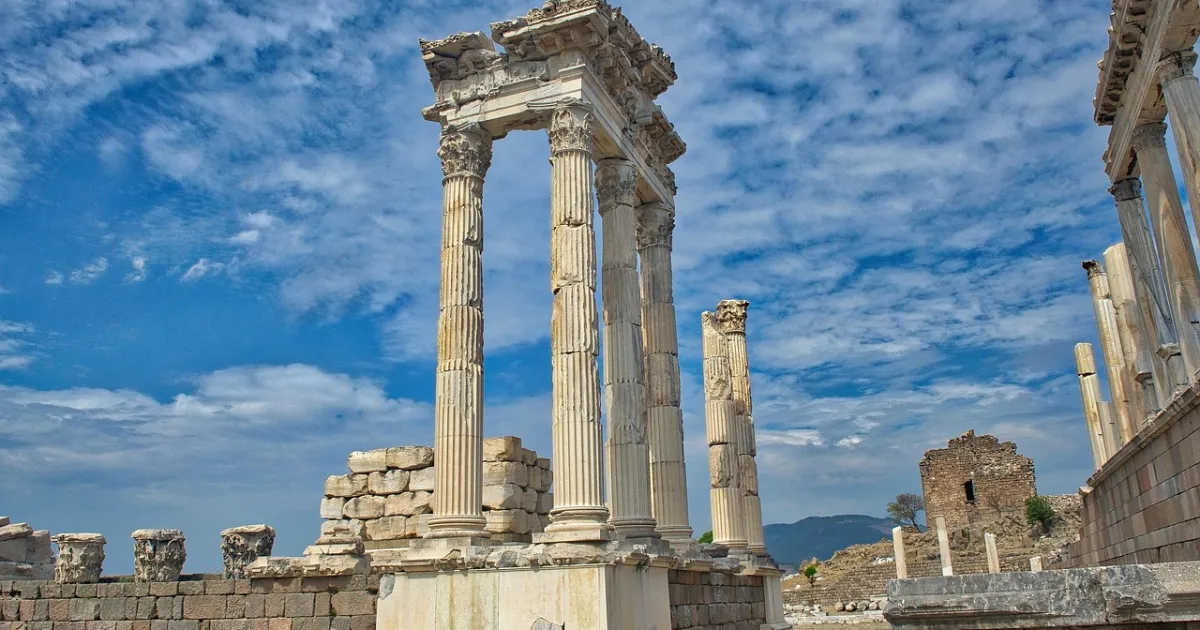
The Greek gods family tree runs through three ruling generations: the first gods, led by Gaia (Earth) and Uranus (Sky); their children the Titans, led by Cronus and Rhea; and the Olympians, led by Cronus's son Zeus. The fullest ancient account is Hesiod's Theogony, a poem of 1,022 lines composed around 730 to 700 BC, whose title means the genealogy or birth of the gods. This guide follows Hesiod and notes where other poets disagree.
The first gods: Chaos, Gaia and their children
In Hesiod's telling, the world begins with four beings who simply come into existence. First is Chaos, which here means a chasm or void, not disorder. Then come Gaia, the Earth; Tartarus, the depths beneath the earth; and Eros, Desire.
From Chaos come Erebus (Darkness) and Nyx (Night), and their children are Aether (Brightness) and Hemera (Day). From Gaia come Uranus (Sky), the Mountains and Pontus (Sea). The tree starts, in other words, as a description of the world: the sky, the sea and the daylight are all somebody's children.
The Titans: children of Gaia and Uranus
Gaia and Uranus have eighteen children. Twelve are the Titans: Oceanus, Coeus, Crius, Hyperion, Iapetus, Theia, Rhea, Themis, Mnemosyne, Phoebe, Tethys and Cronus, the youngest. The others are the three Cyclopes and the three Hundred-Handers.
Uranus hates his children and hides them away inside Gaia. She makes a sickle and asks her children to act; only Cronus agrees. He ambushes and castrates his father, and takes command of the cosmos.
Several Titans matter mainly as parents. Coeus and Phoebe are the parents of Leto, who will be the mother of Apollo and Artemis. Iapetus is the father of Atlas and Prometheus. Hyperion and Theia are the parents of the Sun, the Moon and the Dawn.
Cronus, Rhea and the rise of Zeus
Cronus marries his sister Rhea, and they have six children: Hestia, Demeter, Hera, Hades, Poseidon and Zeus, in that order. Cronus has been warned that one of his children will overthrow him, so he swallows each baby at birth.
When Zeus is due, Rhea gives birth in secret on Crete and hands Cronus a stone wrapped in baby clothes, which he swallows instead. Zeus grows up, forces his father to disgorge the other five, and leads his brothers and sisters in a ten-year war against the Titans, the Titanomachy. The Titans lose and are thrown into Tartarus. Zeus becomes king of the gods.
Notice the pattern: a father fears his children, a mother protects the youngest son, and the son takes the father's place. It happens twice. The story ends only when Zeus finds a way to stop it happening a third time.
The twelve Olympians and their parents
The Olympians are named for their home on Mount Olympus. There is no single official list of the twelve: most lists agree on eleven names and add either Hestia or Dionysus, so thirteen gods appear below. Hades, though a brother of Zeus, is not usually counted, because his realm is the underworld.
| God | Domain | Parents | Roman name |
|---|---|---|---|
| Zeus | Sky and thunder; king of the gods | Cronus and Rhea | Jupiter |
| Hera | Marriage, women and family | Cronus and Rhea | Juno |
| Poseidon | The sea, earthquakes and horses | Cronus and Rhea | Neptune |
| Demeter | The harvest and agriculture | Cronus and Rhea | Ceres |
| Hestia | The hearth and home | Cronus and Rhea | Vesta |
| Athena | Wisdom, handicraft and warfare | Zeus and Metis; born from Zeus's head | Minerva |
| Apollo | Light, prophecy, music and healing | Zeus and Leto | Apollo |
| Artemis | The hunt, the wilderness and the Moon | Zeus and Leto | Diana |
| Ares | War | Zeus and Hera | Mars |
| Hephaestus | The forge, fire and craftsmanship | Hera alone (Hesiod), or Zeus and Hera | Vulcan |
| Aphrodite | Love and beauty | Sea foam around the severed parts of Uranus (Hesiod), or Zeus and Dione (Homer) | Venus |
| Hermes | Messenger of the gods; travel and commerce | Zeus and Maia | Mercury |
| Dionysus | Wine, festivity and theater | Zeus and the mortal Semele | Bacchus (Liber) |
Seen as a family, the Olympians are two generations living in one house: five brothers and sisters, and eight younger gods, most of them children of Zeus.
The children of Zeus who matter most in the myths
Hesiod gives Zeus seven divine partners in turn. Their children fill much of the Greek imagination:
- Metis: Athena. Warned that a son by Metis would overthrow him, Zeus swallows Metis while she is pregnant, and Athena is later born from his head. This is how he ends the cycle of sons replacing fathers.
- Themis: the Seasons and the Fates.
- Eurynome: the three Graces.
- Demeter: Persephone.
- Mnemosyne: the nine Muses.
- Leto: Apollo and Artemis.
- Hera: Ares, Hebe and Eileithyia.
Zeus's children by mortal women are the link between gods and heroes. They include Heracles, son of Alcmene; Perseus, son of Danaë; Helen, daughter of Leda; Minos, son of Europa; and Dionysus, son of Semele, who becomes a god himself.
The family tree as an indented list
Each step to the right is one generation down. Partners are shown in parentheses.
- Chaos
- Erebus and Nyx
- Aether and Hemera
- Erebus and Nyx
- Gaia
- Pontus and the Mountains
- Uranus (with Gaia)
- The Cyclopes and the Hundred-Handers
- Aphrodite, in Hesiod's version
- The Titans, including:
- Coeus (with Phoebe)
- Leto
- Iapetus
- Atlas and Prometheus
- Mnemosyne
- Cronus (with Rhea)
- Hestia
- Demeter
- Hera
- Hades
- Poseidon
- Zeus
- Athena (with Metis)
- Persephone (with Demeter)
- The nine Muses (with Mnemosyne)
- Apollo and Artemis (with Leto)
- Ares, Hebe and Eileithyia (with Hera)
- Hermes (with Maia)
- Dionysus (with Semele)
- Heracles (with Alcmene)
- Coeus (with Phoebe)
Why the sources disagree, and why genealogy mattered
There was never one authorized version of Greek myth. Aphrodite is the clearest case. In Hesiod she rises from the sea foam that gathers when Cronus throws his father's severed parts into the water, which makes her older than Zeus. In Homer's Iliad she is simply a daughter of Zeus and Dione. Hephaestus is Hera's child alone in Hesiod, and a son of Zeus and Hera elsewhere. Helen is usually the daughter of Zeus and Leda, but an early epic, the Cypria, made her mother Nemesis.
These are not mistakes to be corrected. Each poet arranged the family to suit the story being told. So why did Greek storytellers care so much about who was whose child?
- A genealogy is a way to remember. A poet working from memory needs a frame to hang hundreds of names on, and a family tree is the most natural frame there is. The Greeks themselves made the point in a genealogy: the Muses, who inspire poets, are the daughters of Mnemosyne, the goddess of memory.
- A genealogy is a plot. The Theogony is not a list. Its family tree contains its story, the struggle of fathers and sons across three generations.
- A genealogy explains character. Calling Athena the daughter of Metis, or the Fates the daughters of Themis, is a compact way of saying what kind of beings they are.
- A genealogy makes a claim. Greek ruling families traced their lines back to the heroes of epic. The two royal dynasties of Sparta, the Agiads and the Eurypontids, claimed descent from Heracles, and so from Zeus. Another early poem, the Catalogue of Women, organized the whole heroic age into family trees of this kind.
Family historians will recognize all four motives. For more on how stories were carried by memory before writing, see our guide to what oral tradition is. To chart a family, divine or your own, see how to make a family tree.
Questions readers ask
Who were the first Greek gods?
In Hesiod's Theogony, the first beings are Chaos, Gaia (Earth), Tartarus and Eros. Gaia then produces Uranus (Sky), and their children are the Titans.
Who are the parents of Zeus?
Zeus is the youngest child of the Titans Cronus and Rhea. His brothers and sisters are Hestia, Demeter, Hera, Hades and Poseidon.
Are the Titans and the Olympians related?
Yes. The Titans are the parents' generation. The first Olympians are children of the Titans Cronus and Rhea, and most of the rest are children of Zeus.
Why does Aphrodite have two different birth stories?
Ancient poets told the myths differently. Hesiod has her born from sea foam after Uranus is overthrown, while Homer calls her the daughter of Zeus and Dione.
Sources
Keep reading
What Is Genealogy? Definition, Records and Genetic Genealogy
Genealogy is the study of families and the tracing of their lineages. Here is where the word comes from, how it differs from family history, which re…

What Is a Family Crest? Meaning, History and How to Create One
A crest is the figure on top of the helmet in a coat of arms, and in English heraldry arms belong to individuals, not surnames. Here is what that mea…

What Is a Second Cousin? Meaning, Chart and Examples
Your second cousin is the grandchild of your grandparent's brother or sister: the two of you share great-grandparents. Here is how to spot one, with …