What Is a Family Crest? Meaning, History and How to Create One
A crest is the figure on top of the helmet in a coat of arms, and in English heraldry arms belong to individuals, not surnames. Here is what that means for your family, and how to design an emblem of your own.
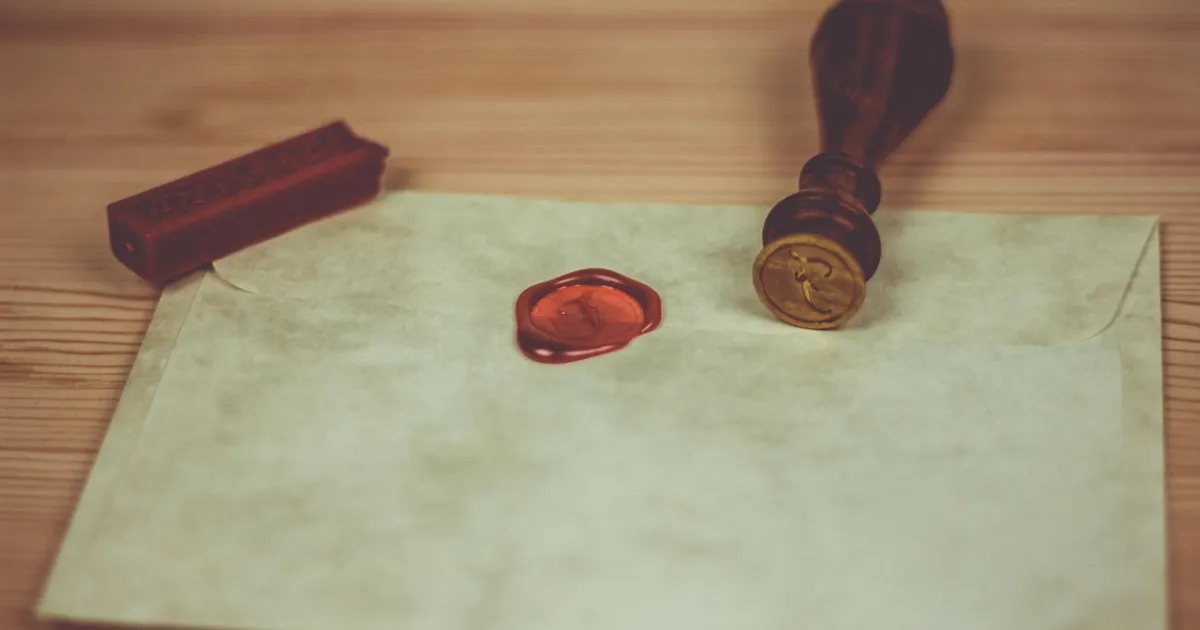
A family crest, in everyday speech, is an emblem that stands for a family. In heraldry the word is narrower: a crest is one part of a coat of arms, the figure that sits on top of the helmet above the shield. And in the English tradition arms are granted to individuals and passed to their heirs, not attached to surnames, so the "family crest" sold beside a last name is usually a picture of somebody else's arms.
Crest, coat of arms, achievement: what the words mean
The crest began as a real object. Knights of the 12th and 13th centuries wore decorative fans on their helmets, which later grew into sculpted figures of cloth, leather or paper on a frame, probably worn at tournaments more than in battle. By the 16th century the age of tournaments had ended and crests survived only as pictures.
Because the crest and its wreath were often shown by themselves, apart from the shield, people began using "crest" for the whole design. Heraldists treat that as a mistake. The coat of arms is, strictly, the design on the shield. The complete display, with everything around the shield, is called the achievement.
The parts of a coat of arms
| Part | Where it is | What it is |
|---|---|---|
| Shield (escutcheon) | Center | The central element; the design on it is the coat of arms proper |
| Helm | Above the shield | A helmet; its style has varied with the rank of the bearer |
| Torse (wreath) | On top of the helm | A circlet of twisted cloth around the base of the crest |
| Crest | On top of the helm | The figure borne above the helmet, often an animal |
| Mantling | Flowing from the helm | Drapery tied to the helmet, recalling the cloth knights wore over it against the sun |
| Supporters | Either side of the shield | Animals, people or mythical beasts holding the shield up; in the United Kingdom, limited to peers, senior knights and some corporate bodies |
| Motto | Usually below the shield | A short phrase in any language; arms are not required to have one |
Why there is no crest for a surname
The Heraldry Society puts it bluntly in its answers to common questions: there is no such thing as a family crest, and there is no coat of arms for the surname Smith, Jones or any other. Coats of arms are granted to a single named person and their heirs. Two different people named Smith may each be granted arms in their own right, and neither design belongs to the name.
In England, Wales and Northern Ireland, heraldry is overseen by the College of Arms, which King Richard III founded by royal charter in 1484. Scotland has its own authority, the Court of the Lord Lyon. Under the College's jurisdiction, a right to arms comes in one of two ways: by a new grant, or by proving descent in an unbroken male line from someone whose arms are recorded in the College's registers.
That is why shops and websites offering "your family crest" deserve caution. In the Heraldry Society's words they are, at best, selling an image of someone else's arms. Buying one is harmless as decoration. It is not evidence about your ancestors, and it does not give you a right to the arms.
Other traditions: clan badges and Japanese mon
Scottish crest badges
Many people with Scottish roots wear a "clan crest." The badge is real, but the name misleads. The crest and motto belong to the clan chief alone. Clan members show allegiance by wearing the chief's crest encircled by a strap and buckle, which signals that the wearer is a follower, not the owner. The custom is younger than it looks: crest badges have been worn on the bonnet only since the 19th century.
Japanese mon
Japan developed its own system independently of Europe. Mon, or kamon when they identify a family, are simple emblems, often floral or abstract. They came into use among the nobility in the middle of the Heian period, around 900 to 1000, as a way to identify families. Later the general public was allowed to choose and use mon as well, although a few, such as the imperial chrysanthemum, were reserved. Traditional formal clothing still displays the wearer's family mon.
In the United States there is no official body that regulates personal arms. Some Americans inherited arms, some received them from authorities abroad, and many have simply adopted a design of their own.
How to find out whether an ancestor bore arms
- Build the tree first. A right to arms follows a documented line of descent, so the name alone proves nothing. Our guide on how to make a family tree explains how to record each generation with its sources.
- Follow the male line back as far as records allow, noting places as well as names. Heraldic rules differ by country, so you need to know where the family lived.
- Look for arms the family actually used. Old seals on letters, bookplates, engraved silver, signet rings and gravestones sometimes carry a shield or crest. Photograph them and note who owned the object.
- Ask the right authority. For English, Welsh or Northern Irish ancestry, that is the College of Arms; for Scottish ancestry, the Court of the Lord Lyon. The College can advise on a search of its records and what it would cost.
- Treat a match with care. Finding arms recorded for someone with your surname is a lead to investigate, not a conclusion.
Many families will find no arms at all, and an honest "none found" is a perfectly good result for a family history.
How to create a family emblem of your own
Nothing stops you from designing a personal or family emblem for a reunion shirt, a recipe book or the cover of a family history. Just be clear about what it is: a design you made, not a grant of arms.
- Gather the family's stories. Trades, places, migrations, a farm, a river, a favorite saying. If you want material, sit down with relatives and our oral history interview questions.
- Choose two or three symbols, no more. A wheat sheaf for farming grandparents, a ship for a crossing, a book for a line of teachers. Good emblems are simple enough to recognize at the size of a coin.
- Pick a shape. A shield is traditional, but a circle, in the manner of a Japanese mon, suits a single bold symbol.
- Limit the colors. Heraldic art uses a few bold, bright, distinct colors. Two or three with strong contrast will print and embroider well.
- Add a motto if you like. A phrase a grandparent really used is better than borrowed Latin.
- Check that it is original. Do not copy an existing coat of arms, a clan chief's crest or an institution's emblem.
- Write down the meaning. A short note on who designed it, when, and what each symbol stands for turns a nice drawing into a piece of family history.
Questions readers ask
What is the difference between a family crest and a coat of arms?
The coat of arms is the design on the shield. The crest is a separate part, the figure on top of the helmet above the shield. People often say "crest" when they mean the whole display.
Does every family have a crest?
No. In English heraldry, arms are granted to individuals and inherited by their heirs, so there is no crest that belongs to everyone with a surname. Many families have never had arms.
Can I create my own family crest?
You can design a personal or family emblem and use it freely as decoration. It is not a grant of arms, and it should not copy arms that belong to someone else.
Are the family crests sold online real?
At best they show arms that belong to someone else. According to the Heraldry Society, buying one gives you a copy of a picture and nothing more.
Sources
Keep reading
What Is a Second Cousin? Meaning, Chart and Examples
Your second cousin is the grandchild of your grandparent's brother or sister: the two of you share great-grandparents. Here is how to spot one, with …
Dutton Family Tree: 1883, 1923 and Yellowstone, Generation by Generation
From James and Margaret Dutton in 1883 to John Dutton III and his children in Yellowstone, here is the Dutton family tree, with a plain note on the o…
What Does "Once Removed" Mean? Cousins Explained with a Chart
In a family tree, removed simply means a difference in generations. Your first cousin's child is your first cousin once removed. Here is how to name …