What Does "Once Removed" Mean? Cousins Explained with a Chart
In a family tree, removed simply means a difference in generations. Your first cousin's child is your first cousin once removed. Here is how to name any cousin, with a chart and worked examples.
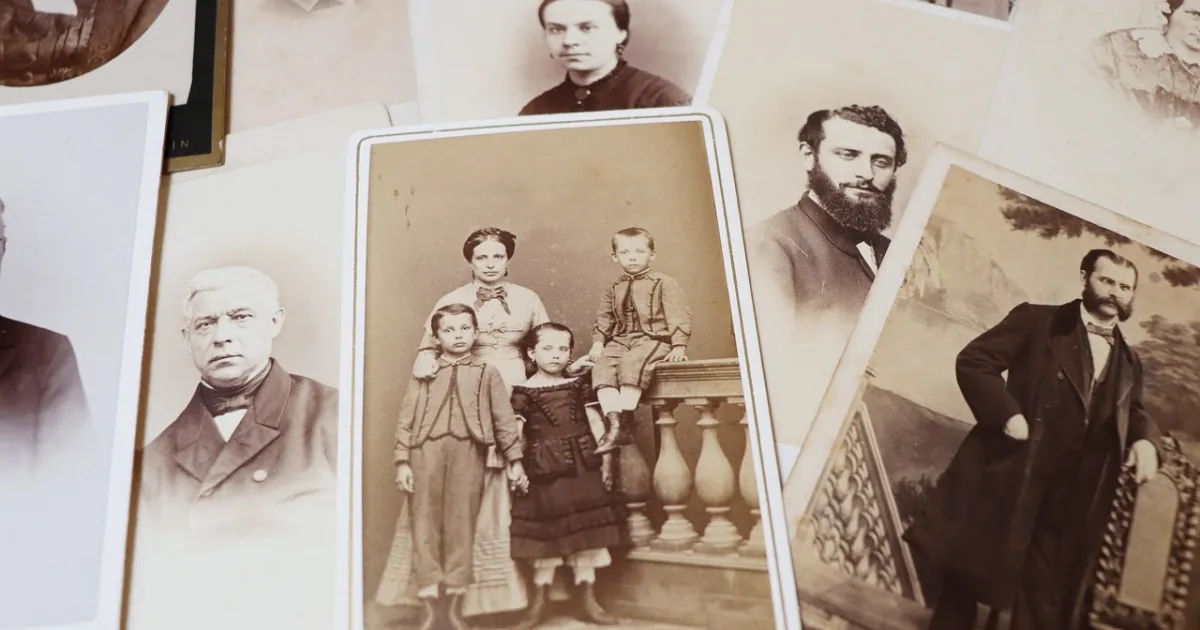
In a family tree, "once removed" means that two cousins belong to generations one step apart. Your first cousin's child is your first cousin once removed, and so is your parent's first cousin. "Twice removed" means two generations apart. The number before "cousin" (first, second, third) tells you how far back your shared ancestor is; the word "removed" tells you how many generations separate you.
First, second and third cousins
A cousin is a relative who shares an ancestor with you but is not your direct ancestor, descendant, sibling, aunt, uncle, niece or nephew. The number in front of "cousin" depends on which ancestor you share.
- First cousins share grandparents. Your first cousin is the child of your parent's brother or sister.
- Second cousins share great-grandparents. Your parent and your second cousin's parent are first cousins to each other.
- Third cousins share great-great-grandparents.
- Fourth cousins share third-great-grandparents, and so on, one more "great" each time.
A quick way to remember it: the number of the cousin is one less than the number of generations between each person and the shared ancestor. Grandparents are two generations up, so their grandchildren are first cousins. Great-grandparents are three generations up, so their great-grandchildren are second cousins.
What "removed" means
Cousins of the same degree are always in the same generation. When two cousins are in different generations, the gap is counted as "removed." The FamilySearch genealogy blog puts it simply: the number before "removed" is the number of generations between the two people.
That means a first cousin once removed can be either of two people:
- the child of your first cousin (one generation below you), or
- the first cousin of one of your parents (one generation above you).
The relationship works both ways. If Rosa is your first cousin once removed because she is your mother's cousin, then you are Rosa's first cousin once removed too. The term does not tell you who is older, only that you sit in different generations.
How to work out any cousin relationship
- Find the most recent common ancestor you both descend from: a shared grandparent, great-grandparent and so on.
- Count the generations from that ancestor down to each of you. A child is 1, a grandchild 2, a great-grandchild 3.
- Take the smaller number and subtract one. That gives the degree of cousin: first, second, third.
- Subtract the smaller number from the larger. That is how many times removed. If the numbers are equal, you are not removed at all.
Cousin relationship chart
Read across from one person's position and down from the other's. Each position is counted from the common ancestor.
| Common ancestor's… | Child | Grandchild | Great-grandchild | 2nd great-grandchild |
|---|---|---|---|---|
| Child | Sibling | Niece or nephew | Grandniece or grandnephew | Great-grandniece or great-grandnephew |
| Grandchild | Niece or nephew | First cousin | First cousin once removed | First cousin twice removed |
| Great-grandchild | Grandniece or grandnephew | First cousin once removed | Second cousin | Second cousin once removed |
| 2nd great-grandchild | Great-grandniece or great-grandnephew | First cousin twice removed | Second cousin once removed | Third cousin |
The pattern continues outward: every step down the diagonal adds one to the cousin number, and every step away from the diagonal adds one "removed."
Worked examples
Your cousin's daughter
You and your cousin Ben share grandparents, so you are each two generations below them. Ben's daughter Ivy is three generations below them. The smaller count is 2, so you are first cousins; the difference is 1, so Ivy is your first cousin once removed.
Your mother's cousin
Your mother and her cousin Carl share grandparents, who are your great-grandparents. Carl is two generations below them and you are three. Again the smaller count is 2 and the difference is 1, so Carl is your first cousin once removed.
Your child and your cousin's child
Both children are three generations below the shared grandparents. The counts are equal, so there is no "removed": they are second cousins. Many families call them "first cousins once removed" by mistake, but that name belongs to the cross-generation pairs above.
Your grandfather's cousin
Your grandfather and his cousin share grandparents, who are your second great-grandparents. His cousin is two generations below them and you are four. The smaller count is 2 and the difference is 2, so he is your first cousin twice removed.
A famous example
Queen Elizabeth II and Prince Philip were third cousins through Queen Victoria: each was a great-great-grandchild of hers. You can see the lines in our Queen Victoria family tree.
Double cousins and half cousins
Double cousins
Double cousins are related through two branches of the family at once. It happens when two siblings from one family marry two siblings from another, for example two brothers marrying two sisters. Their children are double first cousins: they share both sets of grandparents instead of one.
Half cousins
Half cousins descend from half siblings, so they share one grandparent instead of a grandparent couple. If your father and your cousin's mother had the same father but different mothers, you and your cousin are half first cousins. In a family tree, it helps to write "half" in the label so later readers understand why only one grandparent appears.
Tips for labeling cousins in your tree
- Always identify the common ancestor first. Most mistakes come from guessing the relationship from ages.
- Do not assume age tells you the generation. In large families, an uncle can be younger than his nephew, and a "removed" cousin can be your age.
- Use the chart above, or the relationship calculator in family tree software, as a check.
- When writing family history for other readers, name the link in plain words as well: "my mother's cousin" is clearer than the formal term alone.
If you are just starting to map relatives, see our step-by-step guide on how to make a family tree.
Questions readers ask
Is my cousin's child my second cousin?
No. Your cousin's child is your first cousin once removed. Your child and your cousin's child are second cousins to each other.
What is the difference between a second cousin and a first cousin once removed?
Second cousins are in the same generation and share great-grandparents. A first cousin once removed is one generation above or below you and shares your grandparents or your parent's grandparents.
Does "removed" mean the person is no longer family?
No. "Removed" only counts the difference in generations. A cousin once removed is just as much a relative as any other cousin.
What is a double first cousin?
Double first cousins share both sets of grandparents. This happens when two siblings from one family marry two siblings from another.
Sources
Keep reading

Queen Victoria Family Tree: Her Nine Children and Their Descendants
Queen Victoria and Prince Albert had nine children, and their marriages linked Britain to royal houses across Europe. Here is the family tree, from V…

How to Make a Family Tree: A Step-by-Step Guide with an Example
A family tree starts with you and grows one generation at a time. Here is how to gather what relatives know, find the records that confirm it, choose…