What Is a Flashback? Definition, Examples and How to Write One
A flashback is a scene that interrupts a story to show something from the past. Here is how it differs from backstory and flash-forward, how writers signal one, and how to write it clearly.
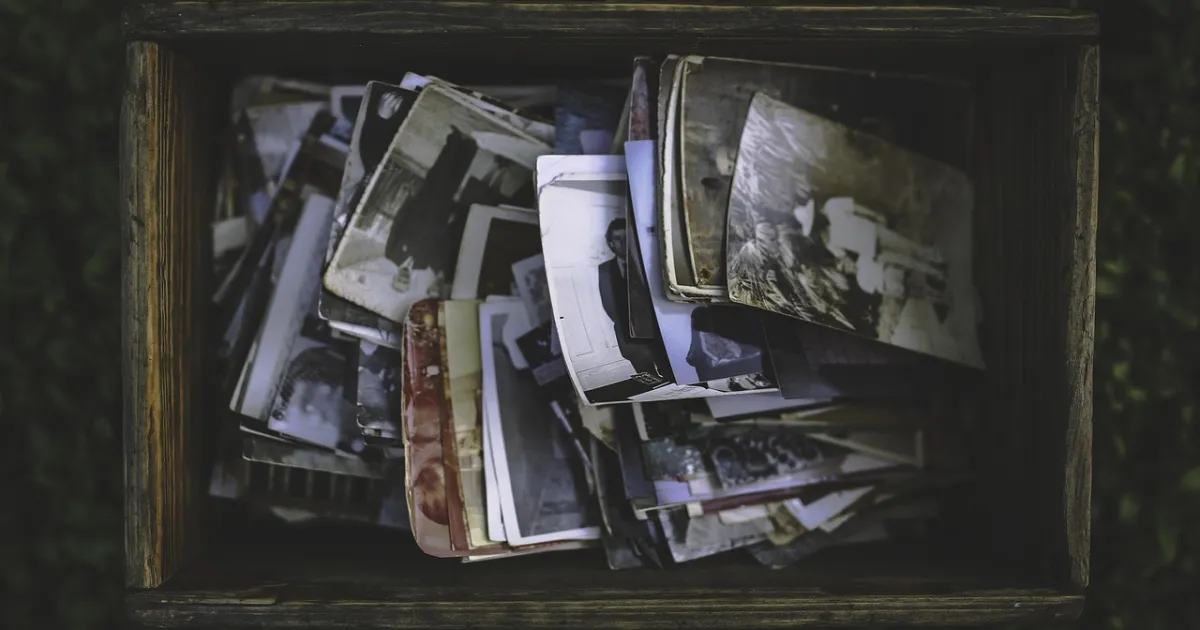
A flashback is a scene that interrupts the present action of a story to show something that happened earlier. The story pauses, steps back in time, plays out a past event and then returns to where it left off. The formal term in literary criticism is analepsis.
Writers use flashbacks to explain why a character behaves as they do, to reveal a secret at the moment it matters most, or to answer a question the story has been holding back.
Flashback vs. flash-forward vs. backstory
| Term | Also called | What it is | Example |
|---|---|---|---|
| Flashback | Analepsis | A scene that takes the story back in time | In the middle of her wedding, a bride relives the day she met someone else. |
| Flash-forward | Prolepsis | A scene that jumps ahead and shows the future | Chapter one shows the bride alone, ten years on, selling the house. |
| Backstory | Background | Everything that happened before the story began | She grew up in three foster homes and never mentions it. |
Backstory is material; a flashback is one method of delivering it. The same history can also come out through dialogue, a line of summary or a character's passing memory. A flashback is the choice to stage it as a full scene.
Critics also separate an external flashback, which goes back to a time before the story started, from an internal one, which returns to an earlier point inside the story. And a flash-forward is not the same as foreshadowing: foreshadowing only hints at what is coming, while a flash-forward shows it.
How writers signal a flashback
A reader needs to know three things: that we are leaving the present, when we have arrived, and when we are back. Common signals:
- A trigger. A smell, a song, an object or a face sets off the memory. The best-known case is in Marcel Proust's Swann's Way (1913), where the taste of a madeleine cake dipped in tea sets off a flood of involuntary memory.
- A tense shift. In a past-tense story, a sentence or two in the past perfect ("she had been nine that summer") opens the door. After that, most writers slide back into simple past so the scene does not drown in "had."
- White space. A blank line, a row of asterisks or a new chapter marks the jump. Some writers add a date or place line.
- A storyteller. One character sits down and tells another what happened years ago.
- In film, a fade, blurred edges, sepia or black-and-white images, often with a voice-over.
Flashback examples in literature and film
- The Odyssey, attributed to Homer. The epic opens in the middle of things. In Books 9 to 12, Odysseus himself recounts his earlier adventures to his hosts, the Phaeacians.
- Wuthering Heights by Emily Brontë (1847). A tenant named Lockwood arrives in 1801, and the housekeeper Nelly Dean tells him the family's story, beginning about thirty years earlier. Most of the novel is her account. Our Wuthering Heights family tree helps keep the generations straight.
- Death of a Salesman by Arthur Miller (first staged in 1949). Willy Loman's memories play out on stage beside the present action, and it is not always clear whether they are accurate. Miller aimed for a play with no transitions between past and present.
- Slaughterhouse-Five by Kurt Vonnegut (1969). Billy Pilgrim has come "unstuck in time," and the novel moves back and forth across his life, circling the 1945 firebombing of Dresden.
- Citizen Kane, directed by Orson Welles (1941). After a newspaper magnate dies, a reporter interviews the people who knew him. Each interview opens a flashback to a different part of his life, and the accounts overlap.
- Casablanca, directed by Michael Curtiz (premiered 1942). Soon after Ilsa walks into Rick's café and asks the pianist to play "As Time Goes By," the film goes back to Paris in 1940 to show how the two parted.
- Rashomon, directed by Akira Kurosawa (1950). Several witnesses give conflicting accounts of the same event, each shown as a flashback.
The device is nearly as old as cinema: the French film Histoire d'un crime (1901), directed by Ferdinand Zecca, is credited with the first film flashback.
An original flashback example
Tom was halfway up the ladder when he smelled it: cut grass and gasoline, the mower two yards over. His hand stopped on the gutter.
He had been eleven the summer his father let him start the mower alone. The cord was stiff. He pulled until his shoulder burned, and when the engine finally caught, his father, watching from the porch with a coffee cup, lifted it an inch. That was all. Tom mowed the whole yard in crooked lines, grinning.
The neighbor's mower coughed and died. Tom looked down at his own son, who was holding the ladder with both hands and trying to look as if it were easy.
Notice the parts. A trigger (the smell) opens the memory. One sentence of past perfect ("had been eleven") marks the step back, then simple past takes over. A sound in the present brings us home. And the memory changes how we read the last line, which is the reason it is there.
How to write a flashback without confusing the reader
- Anchor the present first. Let the reader care about what is happening now before you leave it. A flashback on page one has nothing to interrupt.
- Give it a trigger. Something in the scene should call the memory up. A memory that arrives for no reason feels like the author stepping in.
- Mark the way in and the way out. Use a tense shift, a time phrase ("the winter she turned nine") or white space going in, and a clear return to the present coming out.
- Keep it short and make it a scene. Give it a place, action and dialogue, not a summary of ten years.
- Come back changed. After the flashback, the reader should see the present differently.
- Use the same signals each time. If your first flashback is set off by white space, do the same for the rest.
When not to use a flashback
- When a sentence would do. "He had not spoken to his sister since the funeral" may be all the reader needs.
- When the present scene is at full speed. Stopping a chase for a childhood memory lets the tension out.
- When the past is the better story. If your flashbacks are more alive than your present, start the story earlier and tell it in order.
- When it only explains. A flashback should raise the stakes or change our understanding, not just fill in a résumé.
- Inside another flashback. Films have done it, but on the page nested flashbacks lose most readers.
Deciding where the past belongs is part of planning the whole plot. Our guide to story structure shows where a step back in time fits most naturally.
Questions readers ask
What is a flashback in a story?
It is a scene that takes the reader back to an earlier time, interrupting the present action. It usually shows a memory or event that explains something about a character or the plot.
What is the opposite of a flashback?
A flash-forward, also called prolepsis. It jumps ahead to show events that have not yet happened in the main story.
What is the difference between a flashback and backstory?
Backstory is the history that came before the story. A flashback is one way to present it: as a full scene set in the past. Backstory can also be given through dialogue or a brief summary.
What tense should a flashback be written in?
If the story is in past tense, begin the flashback with a sentence or two in past perfect ("she had lived there once"), then continue in simple past. If the story is in present tense, write the flashback in simple past.
Sources
Keep reading
What Is the Theme of a Story? Definition, Examples and How to Find It
The theme of a story is its central idea: what the events add up to. Learn how theme differs from topic, moral and plot, how to find it in six steps,…
Second Person Point of View: Definition, Examples and Uses
Second person point of view makes "you" the main character. Learn where writers use it, from instructions and gamebooks to literary novels, what it d…
Third Person Point of View: Limited, Omniscient and Objective
Third person point of view tells a story about "he," "she" or "they" from outside. See the limited, omniscient and objective types in one scene writt…