The Personal Essay: What It Is, Examples and How to Write One
A personal essay explores a subject through the writer's own experience and voice. Here is its history from Montaigne, how it differs from memoir, examples to read and how to write one.
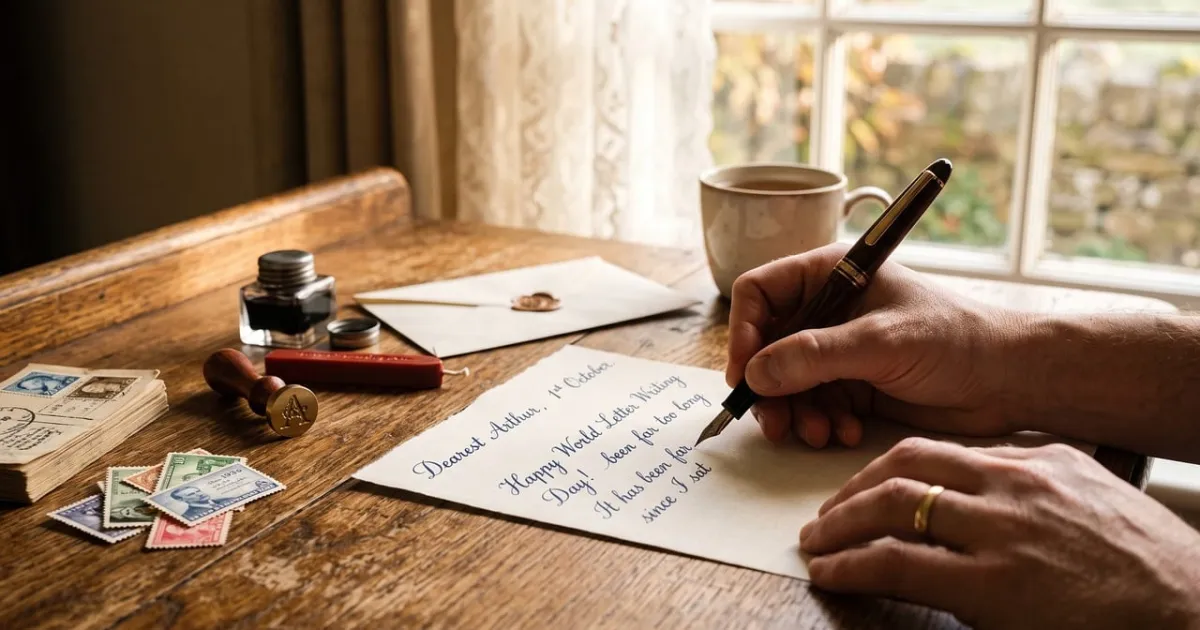
A personal essay is a short piece of nonfiction in which a writer explores a subject through their own experience, in their own voice. It tells some story, but its real business is thinking: the writer turns a memory, a habit or a question over on the page and lets the reader watch. A personal essay can be about anything, from a death in the family to the right way to boil an egg, as long as the writer is honestly present in it.
What is a personal essay?
Most personal essays share a few features:
- First person. The "I" is the writer, not an invented character.
- True material. Events and people are real, reported as accurately as memory allows.
- A question, not a thesis. The essay sets out to find something out, and may end without a firm answer.
- Movement between story and thought. A scene is followed by reflection, which sends the writer to another scene.
- A recognizable voice. Readers come for the company of a particular mind.
Where the form comes from: Montaigne's Essais
The personal essay has a founder. The French writer Michel de Montaigne (1533–1592) published the first edition of his Essais in 1580 and kept revising and adding to it; an enlarged edition appeared in 1588 and a final one after his death, in 1595. The finished work has 107 chapters in three books. He was the first writer to call such pieces essays. The French word means "attempts" or "tests," and that is how he treated them: trials of his own judgment on subjects that run from the education of children to experience itself.
Montaigne made himself the subject. His own summary was "I am myself the matter of my book," and his motto was a question: What do I know? John Florio's English translation appeared in 1603.
In England, Francis Bacon's Essays (1597, enlarged in 1612 and 1625) were the first works in English to use the name. In the eighteenth century Joseph Addison and Richard Steele became England's most celebrated essayists, and in the 1820s Charles Lamb's Essays of Elia, first printed in The London Magazine, showed how intimate and playful the form could be.
Personal essay vs. memoir, narrative essay and college essay
| Form | What it is | Main engine | Typical length |
|---|---|---|---|
| Personal essay | A literary form: one subject explored through the writer's life and mind | Reflection, with story in support | A few pages to a long magazine piece |
| Memoir | A book-length true narrative about one period or thread of a life | Story sustained over many chapters | A book |
| Narrative essay | An essay that tells one event as a story and draws a point from it | Plot: beginning, turning point, end | Usually a few pages |
| College application essay | A personal essay written to a prompt for admissions readers | Showing who the applicant is | Set by the application's word limit |
The borders are soft. A memoir chapter can stand alone as an essay, and many personal essays are narrative. The school version, with its prompt, rubric and single event, is covered in our guide to the personal narrative essay; for the longer form, see memoir vs. autobiography. This page is about the essay as writers practice it outside the classroom.
Personal essay examples worth reading
Classic
- Michel de Montaigne, "Of Cannibals" and "On Experience," from the Essais.
- Charles Lamb, "Dream-Children; A Reverie," collected in Essays of Elia (1823).
- William Hazlitt, "On the Pleasure of Hating," written in 1823 and published in The Plain Speaker (1826).
- Zora Neale Hurston, "How It Feels to Be Colored Me" (1928).
- E. B. White, "Once More to the Lake" (1941).
- Joan Didion, "On Keeping a Notebook" (1966), collected in Slouching Towards Bethlehem (1968).
Modern
- David Foster Wallace, "Consider the Lobster" (2004), which begins as a magazine report on the Maine Lobster Festival and turns into a question about the ethics of boiling a creature alive.
- Roxane Gay, Bad Feminist (2014), essays that join popular culture to her own experience.
- Leslie Jamison, The Empathy Exams (2014), a collection that mixes reporting and memoir.
- Jia Tolentino, Trick Mirror (2019), nine essays on subjects including internet culture.
For a single-volume starting point, try The Art of the Personal Essay (1994), an anthology edited by the essayist Phillip Lopate. For very short samples with annotations, see our narrative essay examples.
How a personal essay is built
There is no required outline, but most successful essays have these parts in some order:
- An occasion. Something prompts the essay: an event, an object, a remark that will not leave you alone.
- Particulars. Scenes, facts and remembered talk that put the reader where you were.
- Turns of thought. Moments where you question your first account: "That is what I told people. It was not the whole of it."
- A widening. The private subject touches something shared, such as a book, a piece of history or a common fear.
- An ending that lands without preaching. Often an image or a changed version of the opening.
Common shapes include the straight chronological story with reflection, the braided essay that alternates two or three strands, and the segmented essay made of short numbered or titled parts.
How to start a personal essay
The opening should sound like a person and raise a question. Five original examples:
- The plain admission: "I have never told my brother that I read his letters."
- The object: "My mother's sewing box holds forty spools of thread and one bullet."
- The question: "Why do I still set two cups out every morning?"
- The scene: "At 4 a.m. the bakery is the only lit window on Alder Street, and for nine years I was the one who lit it."
- The contradiction: "I am a swimming teacher who is afraid of deep water."
Skip the warm-up paragraph about people in general. Begin with yourself and something specific.
How to write a personal essay, step by step
- Find a subject that bothers you. Not the most dramatic event of your life, but the one you keep explaining differently.
- Write down the question in one sentence. Tape it above your desk.
- Draft the scenes first. Two or three moments, with place, sensory detail and what was said.
- Think on the page. After each scene, write what you believed then and what you believe now.
- Look outward. Add one thing from beyond your own life that sheds light on the subject.
- Cut the throat-clearing. The real opening is often the third paragraph of the first draft.
- Check fairness and facts. Would the other people in the essay recognize the events? Have you been as hard on yourself as on them?
- Read it aloud. The voice should sound like you on a thoughtful day.
Questions readers ask
What is a personal essay in simple terms?
It is a short, true piece of writing in which the author uses their own experience to explore a subject. It combines storytelling with reflection and is written in the first person.
How long is a personal essay?
There is no fixed length. Published personal essays run from a single page to many thousands of words; magazines, contests and applications each set their own limits.
Is a personal essay the same as a memoir?
No. A memoir is normally a book that follows a period of the writer's life as a sustained story. A personal essay is short and is organized around a subject or question.
Who invented the personal essay?
Michel de Montaigne is generally credited. He published his Essais in France in 1580 and was the first author to describe his writings as essays.
Sources
Keep reading

80 Journaling Prompts for Memory, Family, Work and Everyday Life
Eighty original journaling prompts grouped by theme, a simple way to use them, and advice on turning journal entries into the raw material of a memoi…

What Is an Autobiography? Definition, Features and Examples
An autobiography is the story of a person's life written by that person. Here is what the word means, where it came from, what marks the form, and th…

Memoir Examples: 15 Notable Memoirs and What They Teach Writers
Fifteen well-known memoirs of different kinds, from a Texas childhood to a year training a hawk, and the specific writing lesson you can take from ea…